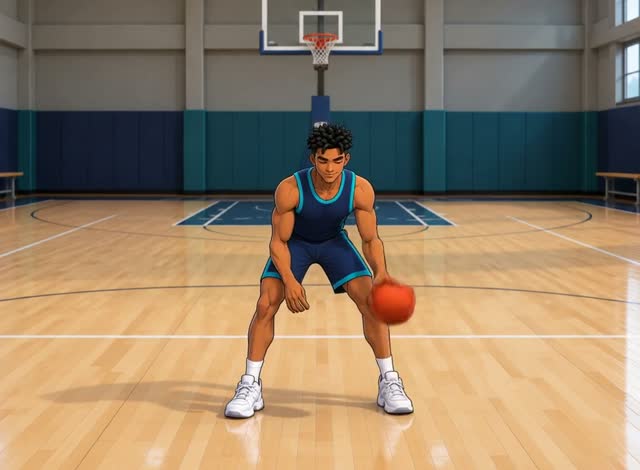
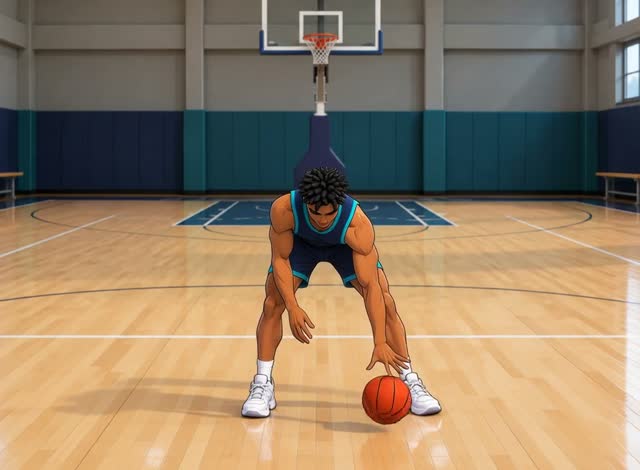
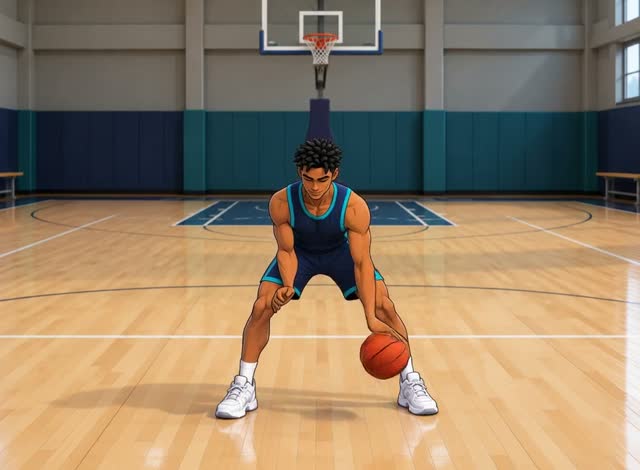
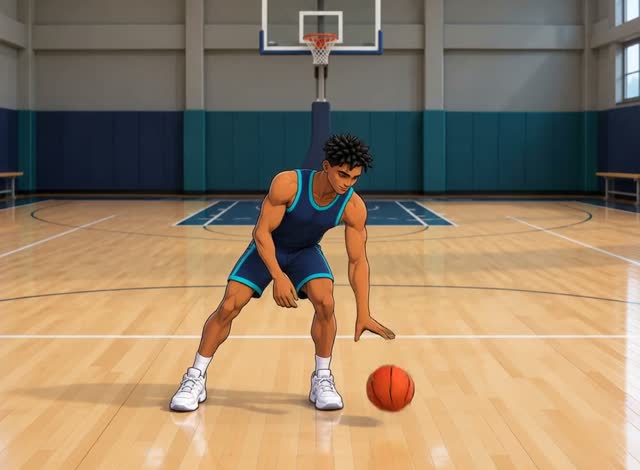
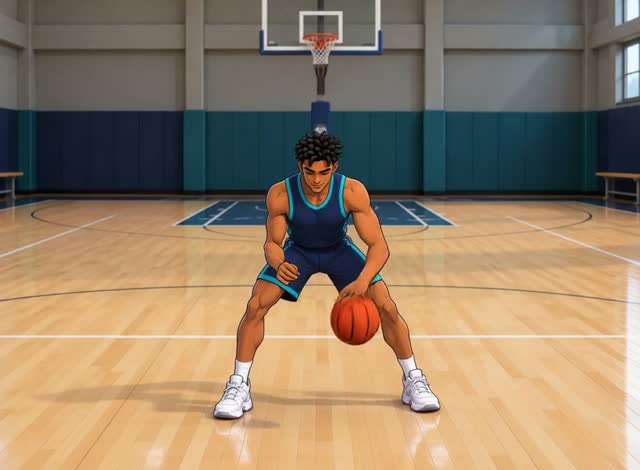
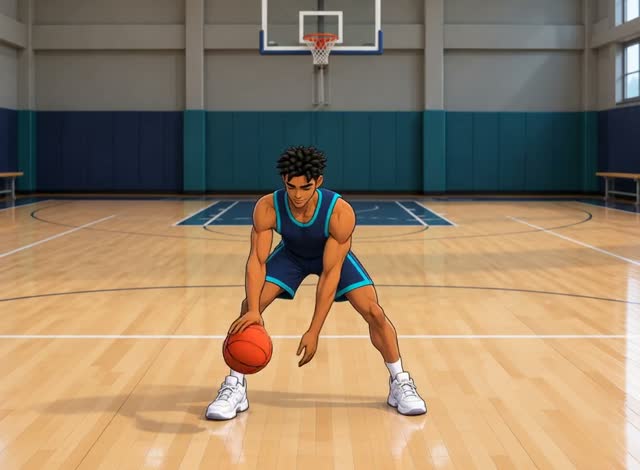
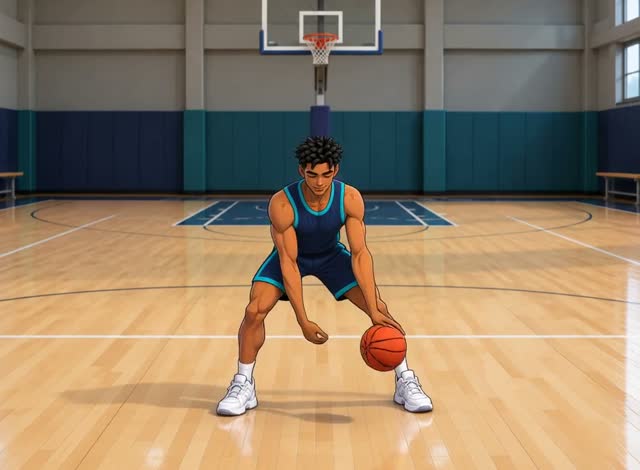
Your weak hand is the one you avoid. For most players it’s the left, for lefties it’s the right. This guide gives you a drill progression to fix it, a 10-minute daily routine, and an honest look at how long it takes.
Why does your weak hand matter so much?
Defenders force you toward your weak hand because they know you won’t do much with it. If you can only drive and dribble one way, you’re easy to guard, no matter how good your strong hand is. Closing the gap opens up the whole floor.
The good news: the weak hand usually improves faster than anything else in your game, because it starts so far behind.
How do you improve your off hand?
Train it daily, give it more reps than your strong hand, and keep it at a speed you can control. Four rules make that work:
- Use a 2:1 ratio. For every 30 seconds with your strong hand, do 60 with your weak hand.
- Go first. Start each session with your weak hand while your focus is fresh.
- Slow down. Your weak hand needs a slower pace than your strong hand at first. Control comes before speed.
- Copy your strong hand. Do the drill with your strong hand for a few seconds, notice the height and rhythm, then match it with your weak hand.
The drill pages below show the left-hand version. If you’re left-handed, swap in the right-hand page for each one: right-hand pound, right low fingertip, right windshield wiper, right walk-the-dog and right in-and-out.
Weak hand drill progression
Work through these stages in order. Move on when you hit the goal on two days in a row.
| Stage | Drill | Reps / time | Goal before moving on |
|---|---|---|---|
| 1 | Pound dribble | 3 × 45 s | Ball stays at knee height, no lost balls |
| 2 | Low fingertip dribble | 3 × 30 s | Small, quick taps beside your foot |
| 3 | Windshield wiper | 3 × 30 s | Even V pattern, other hand stays free |
| 4 | Walk-the-dog | 3 × 30 s | Push and pull without moving your feet |
| 5 | In-and-out | 3 × 30 s | Hand stays on top of the ball, never under |
| 6 | One-dribble crossover | 3 × 45 s | Weak hand catches and dribbles cleanly every time |
| 7 | Continuous crossover | 3 × 45 s | Both hands keep the same height and rhythm |
What each stage builds
- Stages 1–2: strength and touch. The pound dribble teaches your weak hand to push the ball hard. Low fingertip taps teach it to feel the ball with your fingers and wrist instead of your palm.
- Stages 3–5: steering. Wipers move the ball side to side, walk-the-dog moves it forward and back, and the in-and-out adds a fake. Together they teach your weak hand to place the ball where you want it.
- Stages 6–7: switching. Crossovers test whether your weak hand can receive the ball and keep going without a pause. This is where the weak hand usually gets exposed, so be patient here.
Once the stationary stages are clean, take your weak hand on the move: walk, then jog, the length of a court or driveway using only that hand.
A 10-minute daily weak-hand routine
This fits before practice, after school or on a rest day. Rest about 15 seconds between drills.
- Strong-hand pound, 30 s. Feel the rhythm you want to copy.
- Weak-hand pound, 60 s. Match the height and force.
- Weak-hand low fingertip, 60 s.
- Weak-hand windshield wiper, 60 s.
- Weak-hand walk-the-dog, 60 s.
- Weak-hand in-and-out, 60 s. Skip this one until you’ve reached stage 5.
- One-dribble crossover, 60 s. Focus on the catch with your weak hand.
- Weak-hand pound, eyes up, 60 s. Pick a spot on the wall and don’t look down. More on this in how to dribble without looking.
That’s about 10 minutes with rests. If you already have a full workout, use the 15-minute ball handling workout and simply double every weak-hand block.
How long does it take to fix your weak hand?
Most players feel a real difference in two to four weeks of daily practice, but making the weak hand game-ready takes longer. These are typical ranges, not promises. Players who train less often, or start from zero, will be on the slower end.
| Time | What usually changes |
|---|---|
| Week 1 | The ball stops getting away from you on the pound dribble. It still feels awkward. |
| Weeks 2–4 | Stationary drills feel normal. You can lift your eyes for a few seconds at a time. |
| Months 2–3 | Crossovers into the weak hand are clean. You start using it in pickup without thinking. |
| 3–6 months | You can attack with it under pressure, not just protect the ball. |
For a broader look at timelines, see how long it takes to get good handles.
Should you do everyday tasks with your weak hand?
It can help a little, but it won’t fix your dribble. Opening doors or brushing your teeth with your off hand may make it feel less clumsy. Dribbling, though, is its own skill, built by handling a ball. If you only have time for one, choose 10 minutes of weak-hand drills.
A better “everyday” habit: carry and dribble the ball with your weak hand whenever you’re just walking around with it, like on the way to the court or between shots.
How to check that your weak hand is catching up
Compare your two hands directly. A simple test: count how many controlled pound dribbles each hand makes in 30 seconds, ball at knee height, eyes up. Write both numbers down and repeat every two weeks. The gap should shrink.
Filming helps too. Prop your phone up and record both hands doing the same drill. The weak hand usually bounces the ball higher and looks down more.
If you’d rather have a score, the free DribbleLift assessment scores five 10-second moves, including a pound dribble with each hand, and gives you a score out of 100 with a separate weak-hand rating. The app’s Pro plan also has Left Hand Builder and Right Hand Builder workouts that are mostly weak-hand drills, with one strong-hand rep for comparison.
Weak hand mistakes to avoid
- Splitting reps 50/50. Even reps keep the gap the same size. Your weak hand needs more.
- Rushing to crossovers. If the weak-hand pound dribble wobbles, every move that ends in that hand will wobble too.
- Letting the ball rise. A weak hand often dribbles higher because it’s less confident. Keep it at knee height or lower.
- Using your palm. Spread your fingers. A slapping sound usually means your palm is doing the work.
- Hiding it in games. Drills build the skill, but you have to use it in pickup to trust it. Start by bringing the ball up the floor with it.
Common questions
How do I improve my off hand in basketball?
Dribble with it every day and give it roughly double the reps of your strong hand. Start each session with your weak hand while you're fresh, slow down until the ball comes back to the same spot every bounce, and move to harder drills only when the easier ones feel boring.
How fast can you get really good at dribbling with your weak hand?
With 10–15 minutes of daily work, most players feel noticeably more comfortable in two to four weeks. Being able to attack with it under pressure in a game usually takes a few months. It depends on your starting point, how often you train and whether you actually use it when you play.
Should I do everyday tasks with my left hand?
It won't hurt, and brushing your teeth or eating with your off hand can make it feel a bit less clumsy. But it's not a replacement for dribbling. Ball control comes from handling a ball, so put your effort into daily weak-hand drills first.
I'm left-handed. Which drills should I use?
Use the right-hand versions. Every one-hand drill in the library has a right and a left page, so lefties follow the same progression with the right-hand pound, right low fingertip, right windshield wiper and right walk-the-dog.