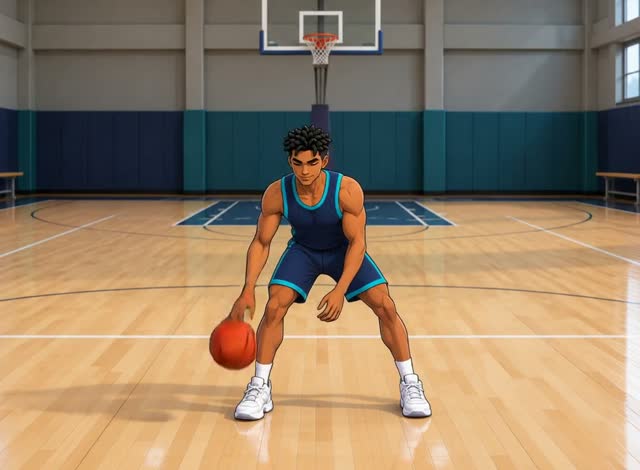
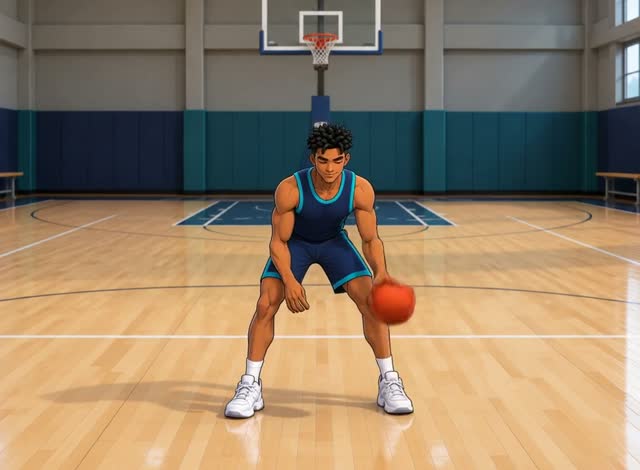
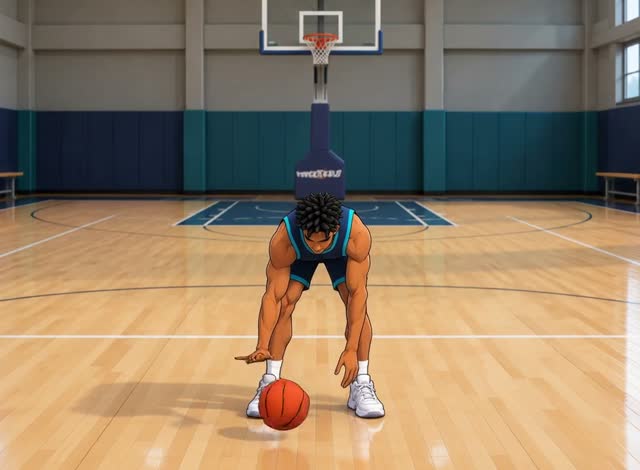
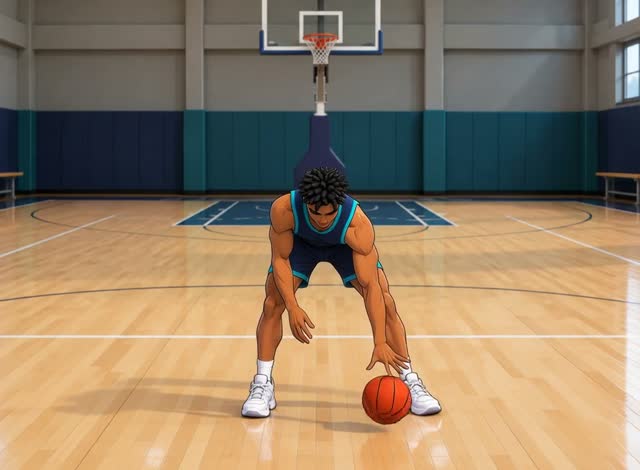
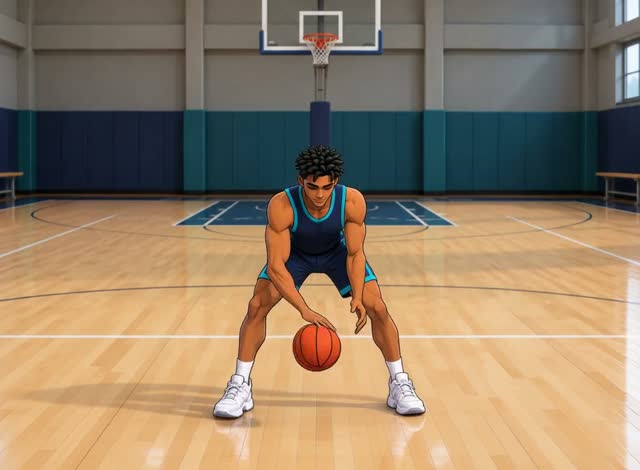
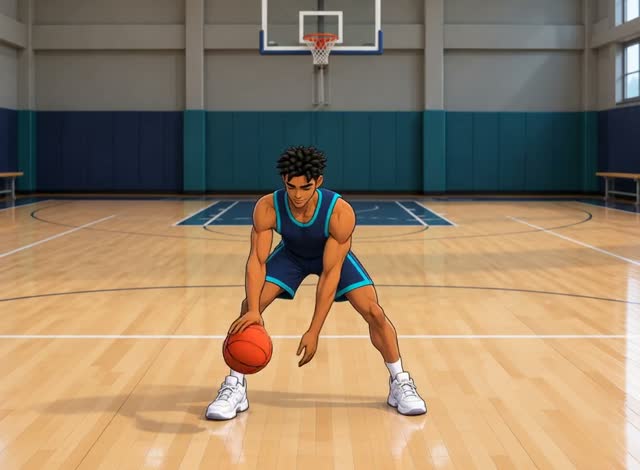
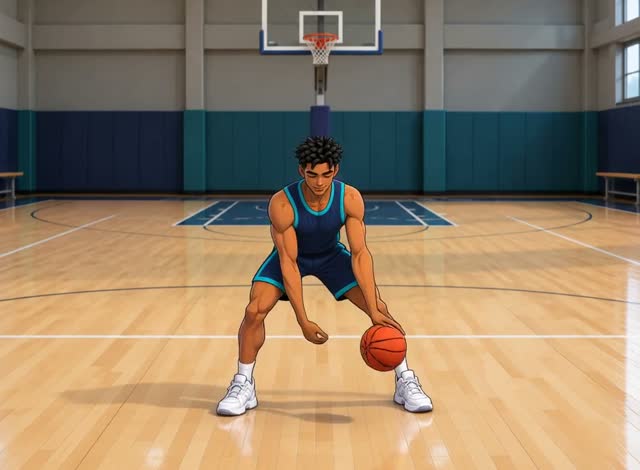
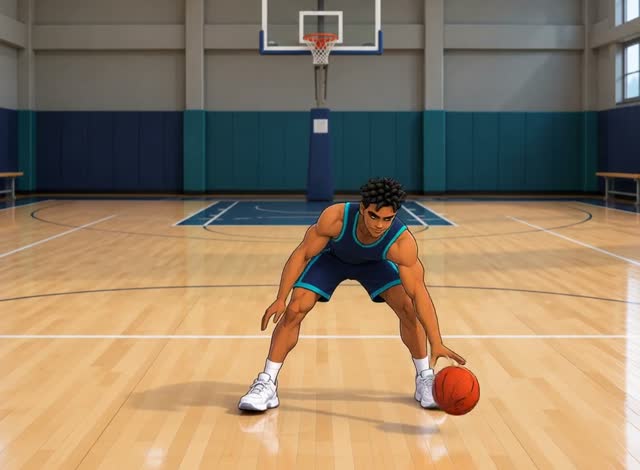
Good handles come from a few habits repeated thousands of times, not from learning dozens of moves. This guide covers what those habits are, which drills build them, and a four-week plan that turns them into a routine.
What “good handles” actually means
When coaches say a player has a good handle, they usually mean five things:
| Skill | What it looks like | Drill that builds it |
|---|---|---|
| Control | The ball comes back to the same spot every bounce | Pound dribble |
| Touch | Fingertips and wrist guide the ball, not the palm | Low fingertip dribble |
| Weak hand | The off hand can do everything the strong hand can | Left-hand pound |
| Change of direction | Switching hands without breaking rhythm | Continuous crossover |
| Eyes up | Dribbling without looking at the ball | Any stationary drill, eyes on a target |
Moves like the spin or the behind-the-back are built on top of these. If your pound dribble wobbles, a fancy combo will wobble too.
The 5 habits behind every good handle
- Stay low. Bend your knees and hips so the ball has less distance to travel. A lower dribble is harder to steal and quicker to control.
- Pound the ball. Push it into the floor hard. A firm dribble comes back to your hand faster, which gives defenders less time and gives you more control.
- Fingertips, not palm. Spread your fingers and let your wrist do the work. Slapping the ball with your palm kills your feel for it.
- Eyes up. Look at a spot on the wall, a TV or a partner. Every rep you spend looking at the ball is a rep you can’t use in a game.
- Work the weak hand twice as much. Most players are a lot better with one hand. Defenders know it, so give your weak hand double the reps until the gap closes. See our weak hand dribbling guide.
The drills that matter most
You don’t need a long list. These eight cover the habits above, from easiest to hardest:
- Right-hand pound and left-hand pound: hard dribbles at knee height. The base of everything.
- Low fingertip dribble: quick, low taps that build touch and wrist control.
- Windshield wiper: side-to-side dribbles in front of you with one hand.
- One-dribble crossover: one clean switch from hand to hand, low and in front of your body.
- Continuous crossover: nonstop crossovers with an even rhythm.
- Figure-eight: the ball weaves around and between your legs and builds coordination with both hands.
Each drill page has a looping video demo and the cues to focus on. The full list is in the drill library.
A 4-week plan
Do 15–20 minutes a day, at least five days a week. Each block is 30–45 seconds, with a short rest after every two blocks.
| Week | Focus | Daily routine |
|---|---|---|
| 1 | Control | Pound dribble and low fingertip dribble with each hand. Eyes down is fine for now. |
| 2 | Weak hand | Same drills, but double the time on your weak hand. Add windshield wipers. Start lifting your eyes. |
| 3 | Switching hands | Add one-dribble and continuous crossovers. Keep every dribble below your hip. |
| 4 | Speed and eyes up | Add the figure-eight. Push the pace until you lose the ball about once per block, with your eyes on a target. |
Want it laid out minute by minute? Follow the 15-minute ball handling workout.
How to tell if you’re improving
“Feels better” is hard to trust. Pick one or two measures and check them every couple of weeks:
- Count clean reps. How many continuous crossovers can you do in 30 seconds without losing the ball?
- Film yourself. Prop your phone up and record your pound dribble. Check how high the ball bounces, whether you look down and whether your weak hand keeps the rhythm.
- Take a scored test. The DribbleLift assessment scores five moves out of 100 and tells you the one thing to fix first, so a retest a few weeks later shows exactly what changed.
Common mistakes that slow players down
- Practicing only what you’re good at. Strong-hand moves feel good, but the weak hand is where your score goes up fastest.
- Going too fast too soon. Speed you can’t control just turns into turnovers. Get clean first, then get fast.
- Long, rare sessions. Fifteen minutes every day beats an hour on Saturday.
- Standing straight up. If your knees aren’t bent, the ball travels too far and you lose control.
- Never testing yourself. Without a number or a video, it’s hard to know what to work on next.
Common questions
How can I improve my handles fast?
Train daily rather than in long weekend sessions, give your weak hand about twice the reps of your strong hand, and practice at a speed where you lose the ball now and then but not every few seconds. Most players notice they are more comfortable on the weak side within two to four weeks of daily work.
Can I improve my ball handling without a court?
Yes. Almost every ball-handling drill is stationary and needs only a few feet of flat floor: a garage, driveway, patio or basement works. A hoop isn't needed at all.
Should I use a weighted ball or wear gloves?
They're optional extras, not the foundation. A regular ball dribbled hard and low builds most of the strength you need. If you use a heavier ball, keep sessions short and finish with your normal ball so your touch doesn't change.
Is it too late to get good handles as an adult?
No. Ball handling is a motor skill, and adults learn it the same way teens do: short, frequent, focused reps. You may progress a little more slowly than a 14-year-old, but players in their 20s and 30s improve noticeably with a few weeks of daily practice.